


Hot Springs
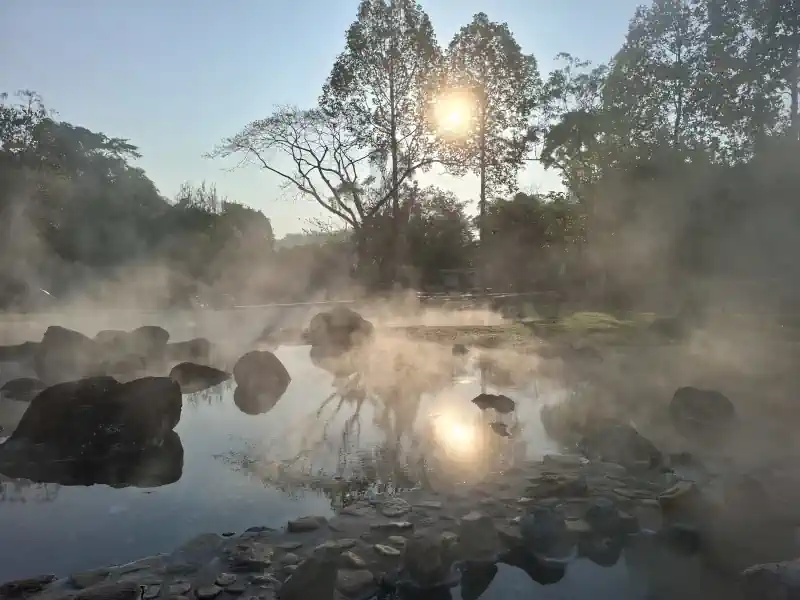
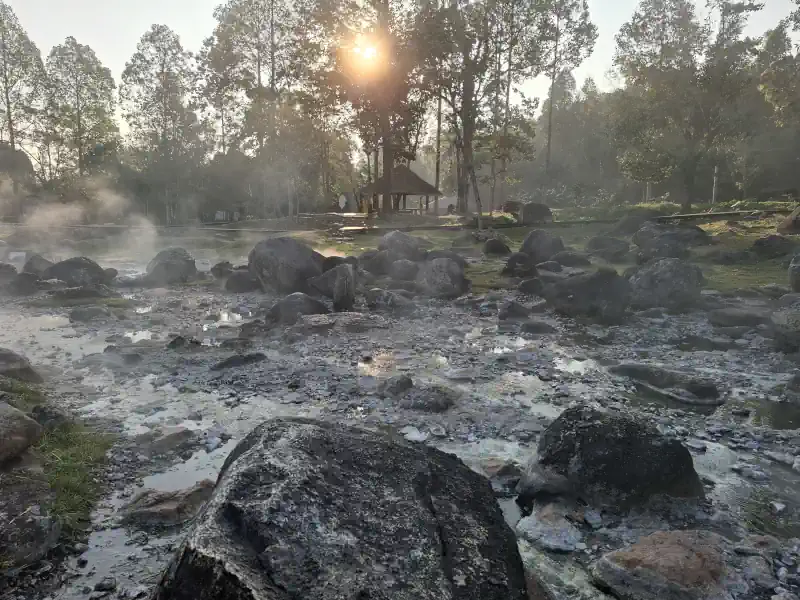
The park’s main highlight is its hot springs, located in a large rocky area near the visitor center and main parking lot.
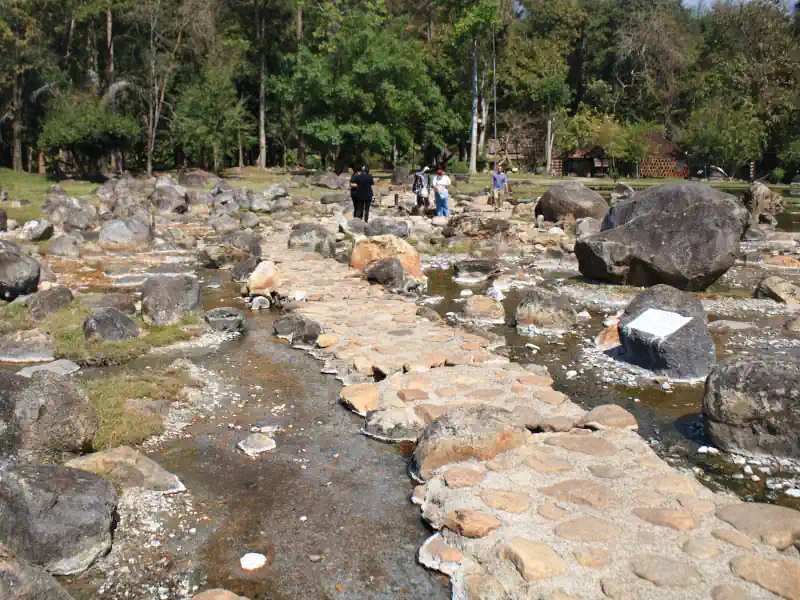
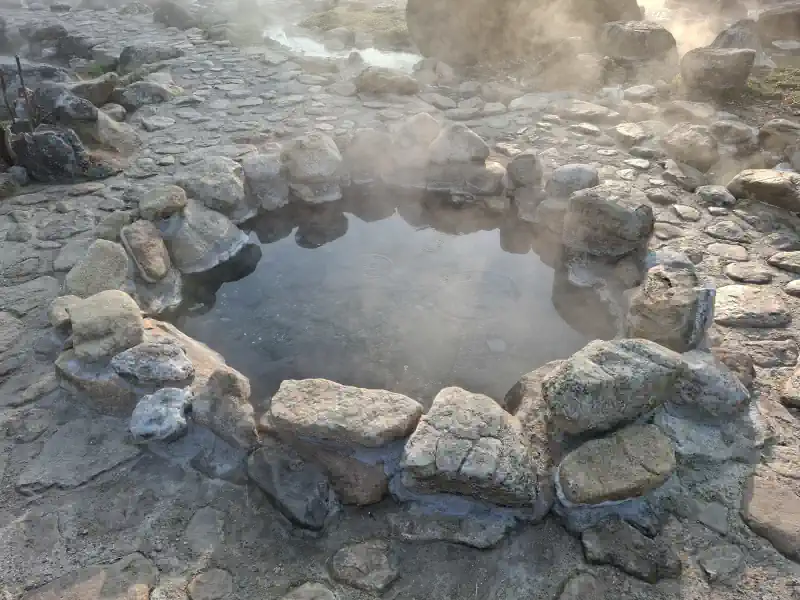
The water emerging from the surface is too hot for bathing, so visitors often bring eggs to boil in the springs.
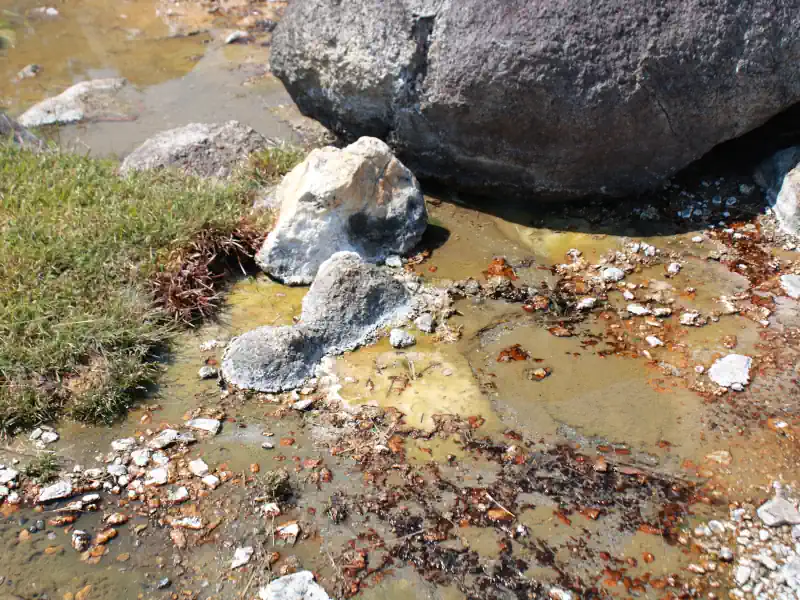
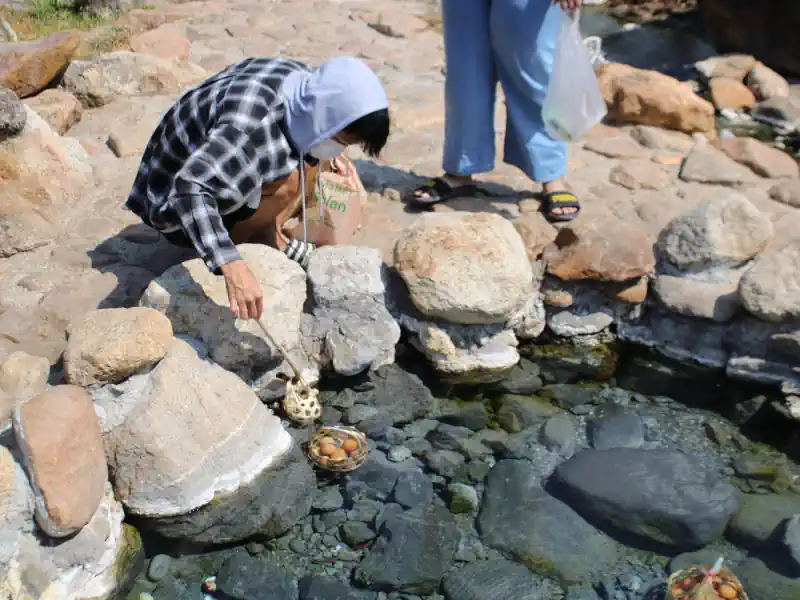
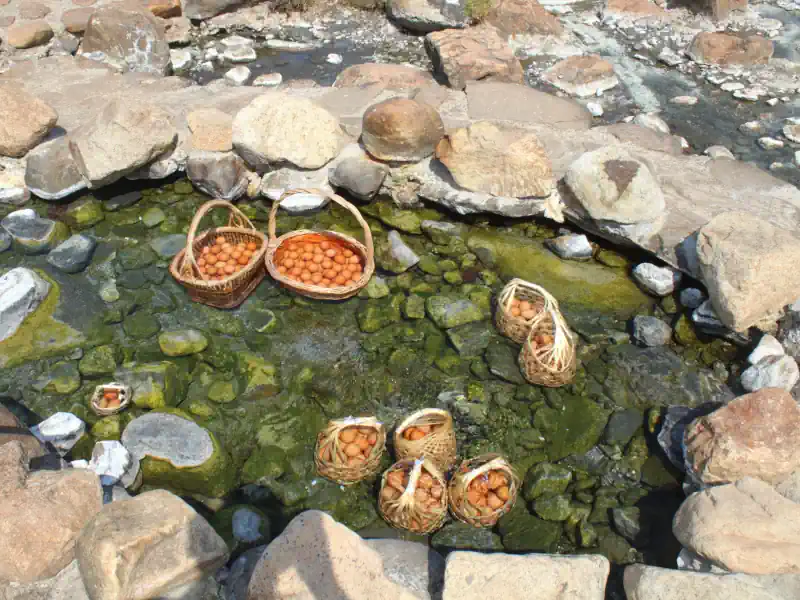
Eggs are placed in bamboo baskets and lowered into the ponds with a stick.
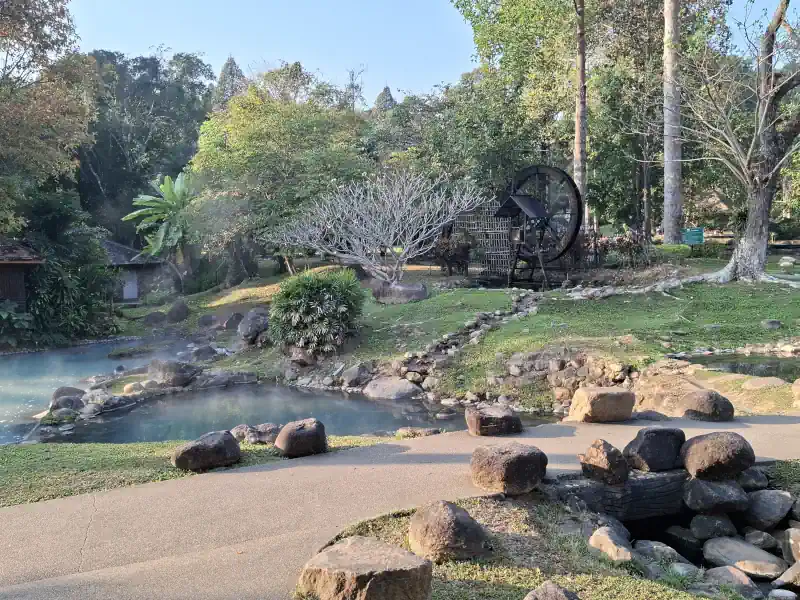
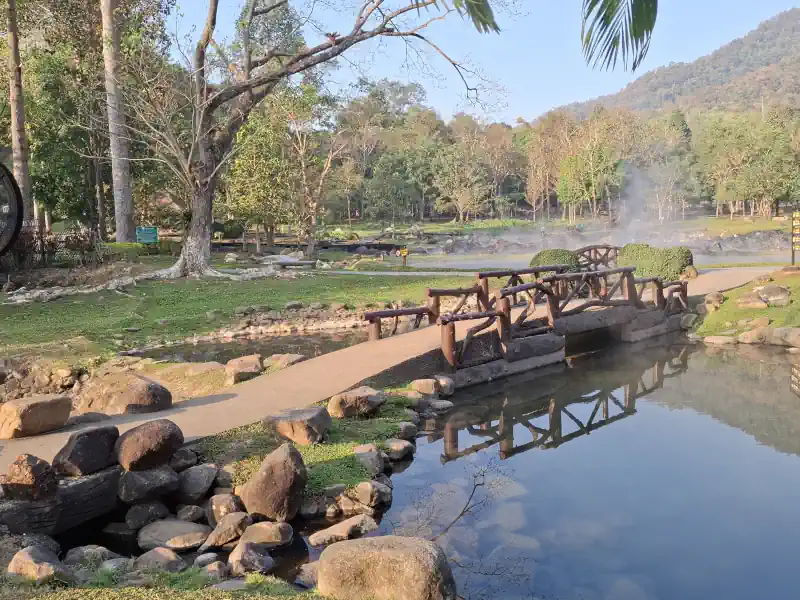
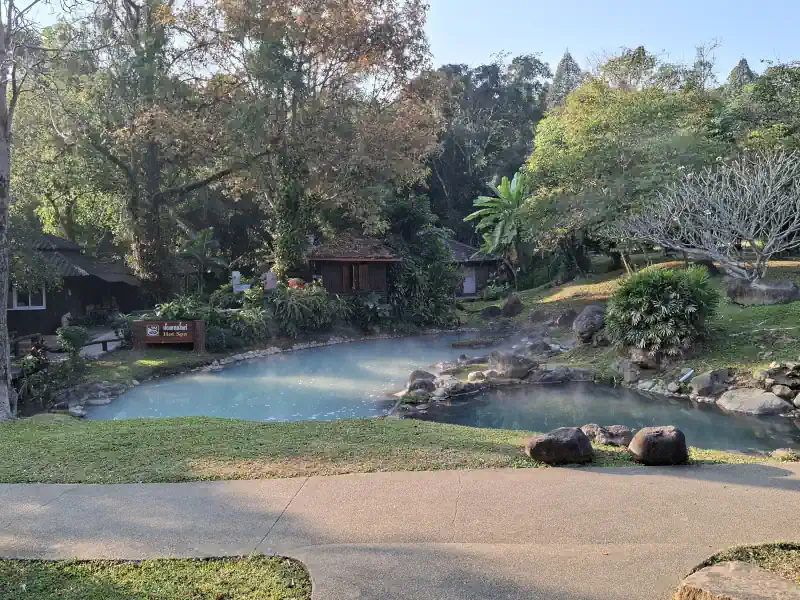
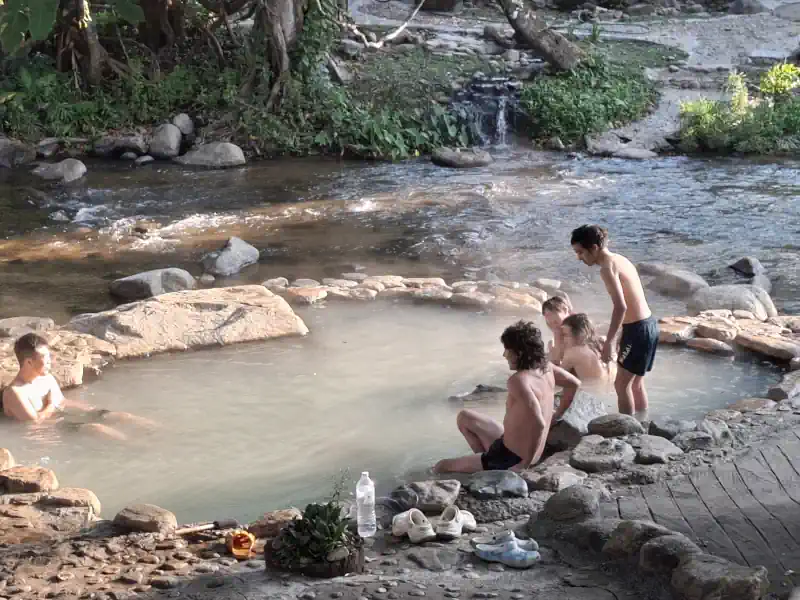
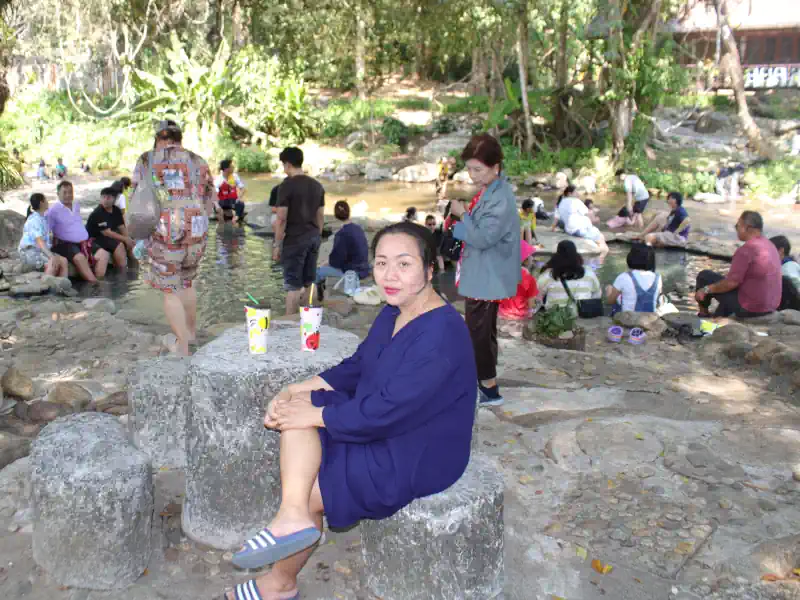
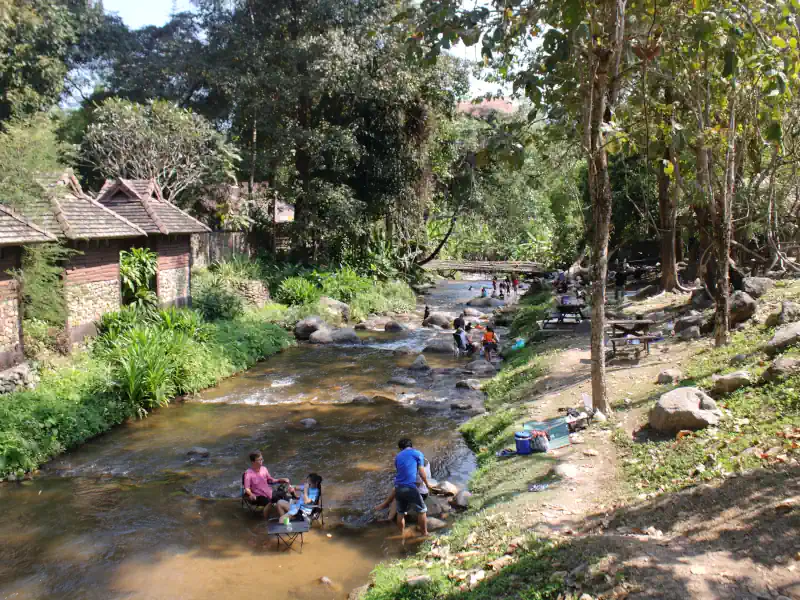
Further down, where the hot springs meet a river, it’s a great spot for bathing.
Onsen
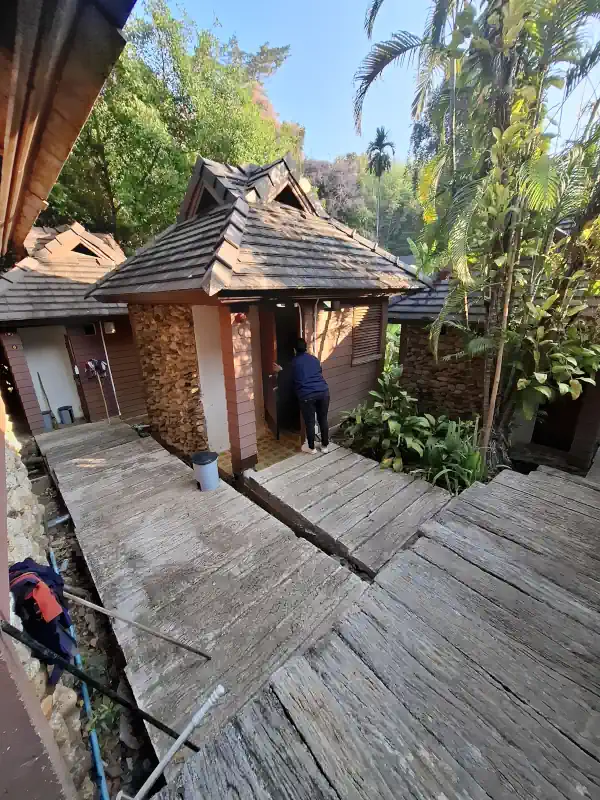
Another option is the onsen huts near the hot springs. These private huts offer mineral baths in tubs filled with 40°C water directly from the springs.
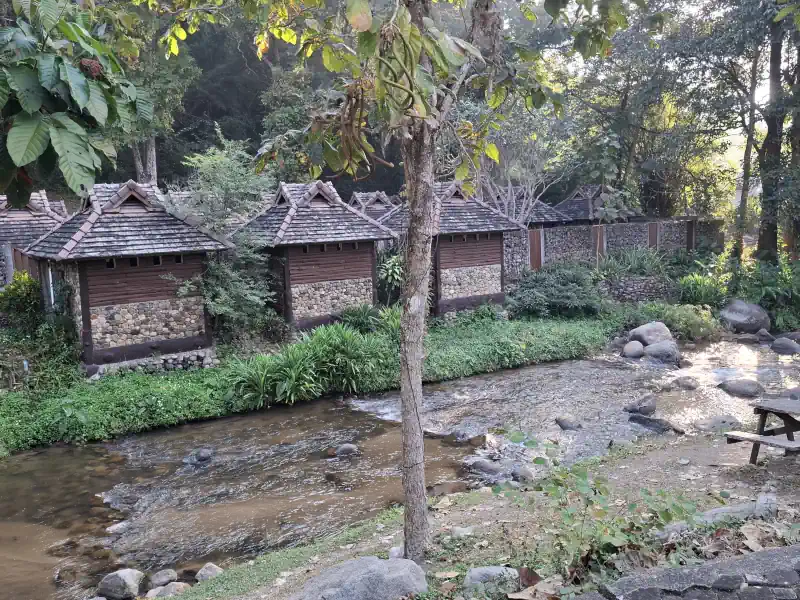
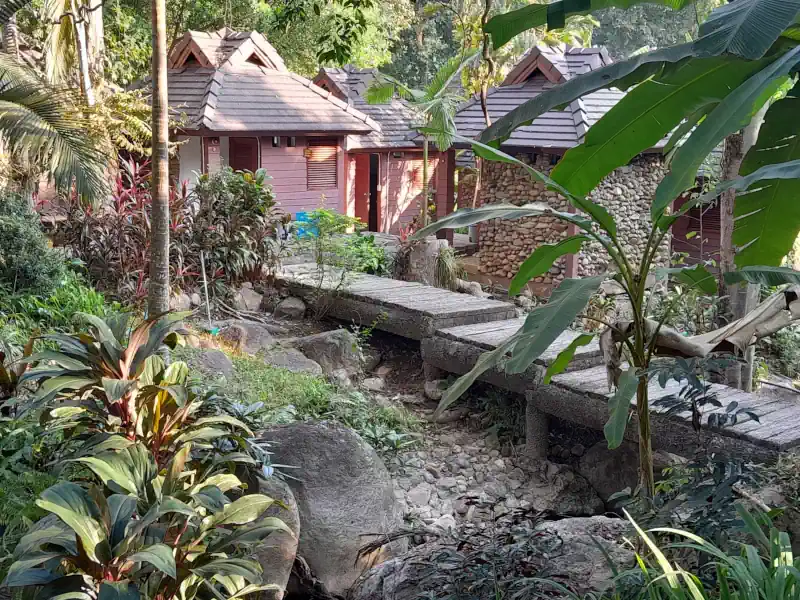
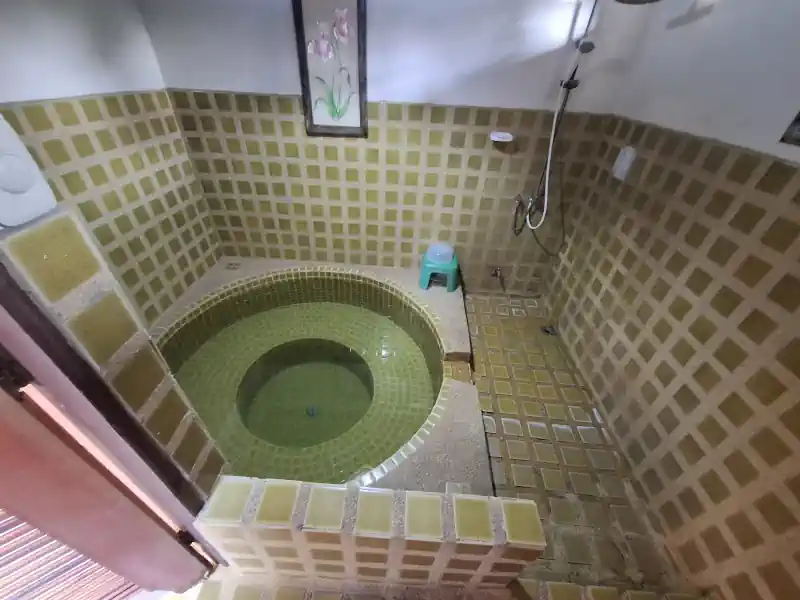
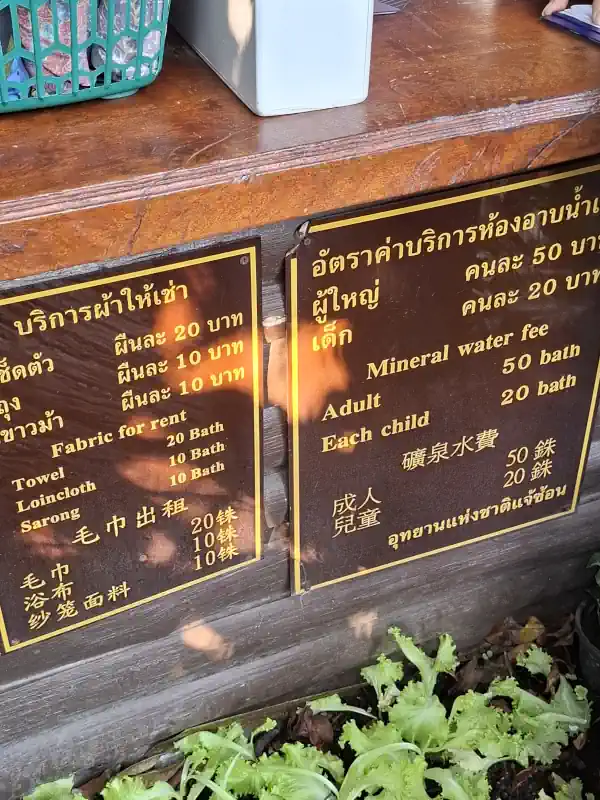
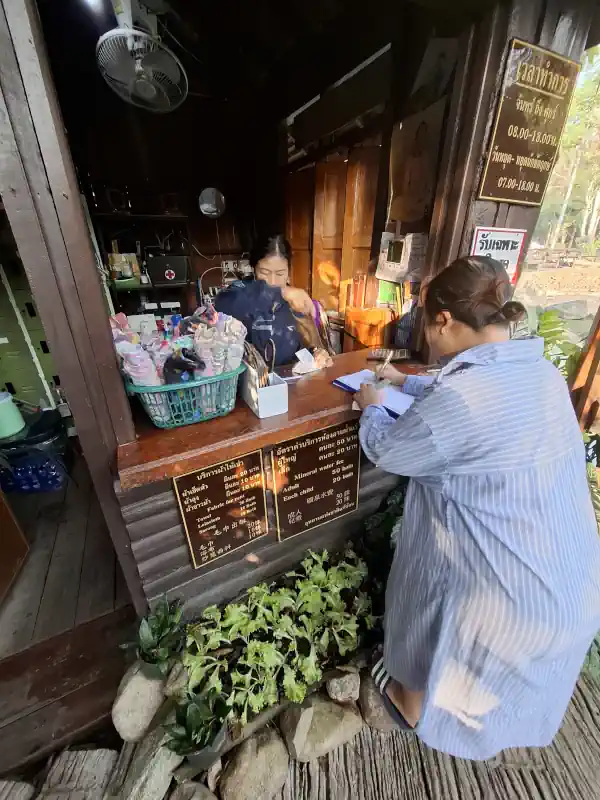
They’re available daily from 7:00 AM to 6:00 PM for just 50 THB per person.
𝘕𝘰𝘵𝘦: 𝘚𝘵𝘢𝘺𝘪𝘯𝘨 𝘪𝘯 𝘵𝘩𝘦 𝘱𝘢𝘳𝘬 𝘥𝘰𝘦𝘴𝘯’𝘵 𝘢𝘭𝘭𝘰𝘸 𝘺𝘰𝘶 𝘵𝘰 𝘷𝘪𝘴𝘪𝘵 𝘵𝘩𝘦 𝘩𝘰𝘵 𝘴𝘱𝘳𝘪𝘯𝘨𝘴 𝘢𝘵 𝘢𝘯𝘺 𝘵𝘪𝘮𝘦. 𝘈𝘴 𝘯𝘪𝘨𝘩𝘵 𝘧𝘦𝘭𝘭, 𝘵𝘩𝘦 𝘨𝘶𝘢𝘳𝘥𝘴 𝘱𝘰𝘭𝘪𝘵𝘦𝘭𝘺 𝘢𝘴𝘬𝘦𝘥 𝘶𝘴 𝘵𝘰 𝘭𝘦𝘢𝘷𝘦, 𝘢𝘯𝘥 𝘸𝘦 𝘳𝘦𝘵𝘶𝘳𝘯𝘦𝘥 𝘵𝘰 𝘰𝘶𝘳 𝘣𝘶𝘯𝘨𝘢𝘭𝘰𝘸. 𝘌𝘷𝘦𝘯𝘪𝘯𝘨 𝘢𝘤𝘵𝘪𝘷𝘪𝘵𝘪𝘦𝘴 𝘪𝘯 𝘵𝘩𝘦 𝘱𝘢𝘳𝘬 𝘢𝘳𝘦 𝘭𝘪𝘮𝘪𝘵𝘦𝘥 𝘵𝘰 𝘳𝘦𝘭𝘢𝘹𝘪𝘯𝘨 𝘰𝘯 𝘺𝘰𝘶𝘳 𝘷𝘦𝘳𝘢𝘯𝘥𝘢 𝘢𝘯𝘥 𝘦𝘯𝘫𝘰𝘺𝘪𝘯𝘨 𝘵𝘩𝘦 𝘴𝘰𝘶𝘯𝘥𝘴 𝘰𝘧 𝘯𝘢𝘵𝘶𝘳𝘦 :).
The next day, we visited the hot springs at dawn on our way to Chae Son Waterfall to capture the classic images of steam rising from the hot springs in the cool mountain air.
Chaeson Waterfall
The park’s second most popular attraction is a six-tiered waterfall, about 1.5 km by the road from the visitor center.
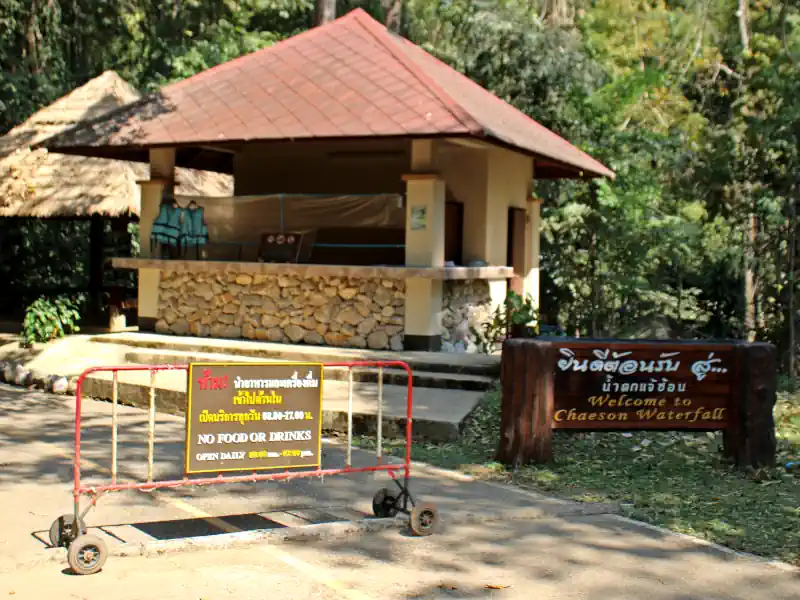
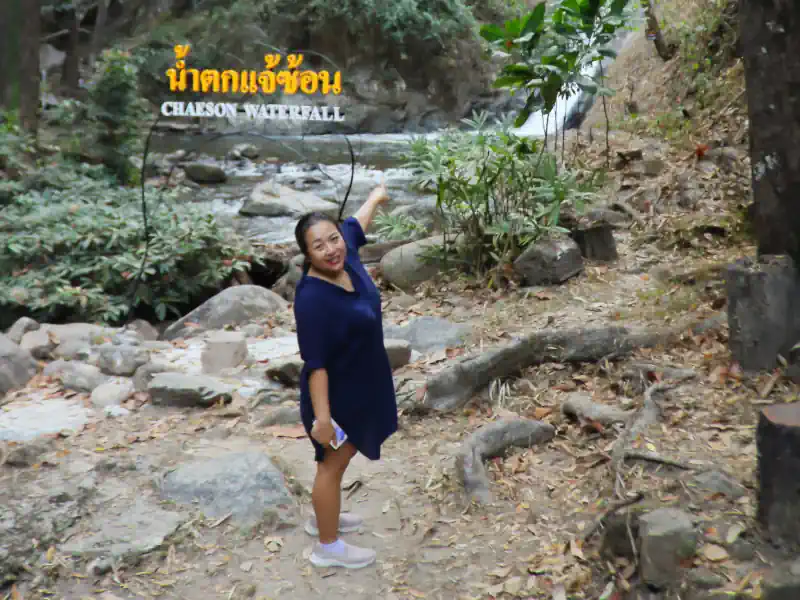
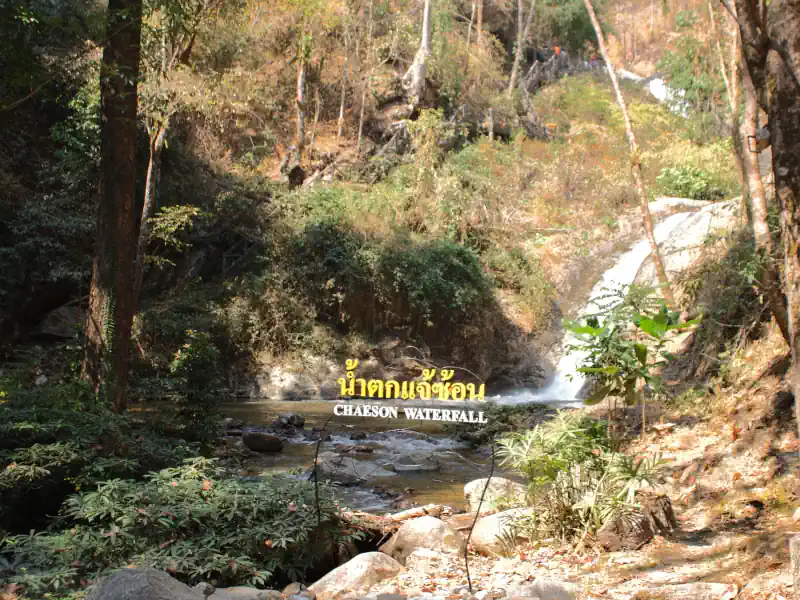
There is also a nature trail that leads from the hot springs along the river to the waterfall. The total length of the trail along the river and the stairs along the waterfalls to the hydroelectric power plant is about 2 kilometers. No guides or rangers are needed for this trail.
From there, another more challenging nature trail leads upstream to another waterfall, Mae Piak; this route is 4 kilometers long and takes about 2.5 hours to complete, requiring permission from park rangers. We plan to explore this trail on our next visit!
Getting There
From Chiang Mai
There are two roads from Chiang Mai to Chae Son National Park. While the Chiang Mai side of these mountains is well-known tourist destination with numerous guesthouses, homestays, cafes, hiking trails (perhaps the highest density of hiking trails in all of Thailand), and ziplines, the Lampang side is less developed and sees far fewer tourists, as it requires traversing mountain roads from Chiang Mai.
The shorter but steeper and narrower route passes through Mae Kampong village and Kew Fin Viewpoint. Five years ago, my husband and I took this route on a large motorcycle, and some of the inclines were so steep that I had to dismount to prevent the bike from tipping over. When I called the park this time, a staff member told me that this road was still impassable for cars. However, we did meet some locals at the park who claimed they drove a minivan through it. If you take this route, please share your experience (and photos) in the comments!

The other road is longer but well-maintained. We drove this route by car, stopping at Stone Cliff Viewpoint, Lychee Viewpoint, and a café overlooking Doi Langka.
From Lampang
For those relying on public transport, songthaews (trucks with seats in the back) operate from Lampang between 8:00 AM and 6:00 PM. They depart from a small side street off Talad Gao Road on the south side of the Wang River. The journey takes about 1.5–2 hours.
Entrance Fees
For Thai nationals, the entrance fee is 40 baht for adults and 20 baht for children. For foreigners, it’s 200 baht for adults and 100 baht for children. There’s also a vehicle fee: 30 baht for four-wheel cars, 20 baht for motorcycles, and 10 baht for bicycles.
Accommodations
The entrance fee is more than compensated by the incredibly low cost of excellent bungalows! About 500 meters past the checkpoint, turn left at the “Bungalow” sign and follow the road uphill to the accommodation office. They offer several bungalow options for different numbers of guests, averaging about 300 baht per person on weekends and holidays, and 200 baht on weekdays.
We arrived on a Saturday and stayed in a spacious three-person bungalow with mountain views for just 900 THB per night. On a weekday, this bungalow would cost 600 baht!
Check-in is at 12:00 PM, and checkout is by 11:00 AM. While most bungalows were vacant when we arrived, they filled up by evening. It’s a good idea to book in advance via the phone number on the signage (though the staff don’t speak English—ask a Thai friend for help).
Food
Near the visitor center and parking area, there are several typical Thai eateries, which close by 6:00 PM. You can purchase meals here or bring food to store in your bungalow’s refrigerator. Cooking and alcohol consumption are prohibited in the park. However, we did notice some neighbors enjoying a quiet evening beer on their veranda.
It is also a perfect spot to stay overnight when traveling from Chiang Mai to the Sky Pagodas (Wat Chaloem Phra Kiat).
